
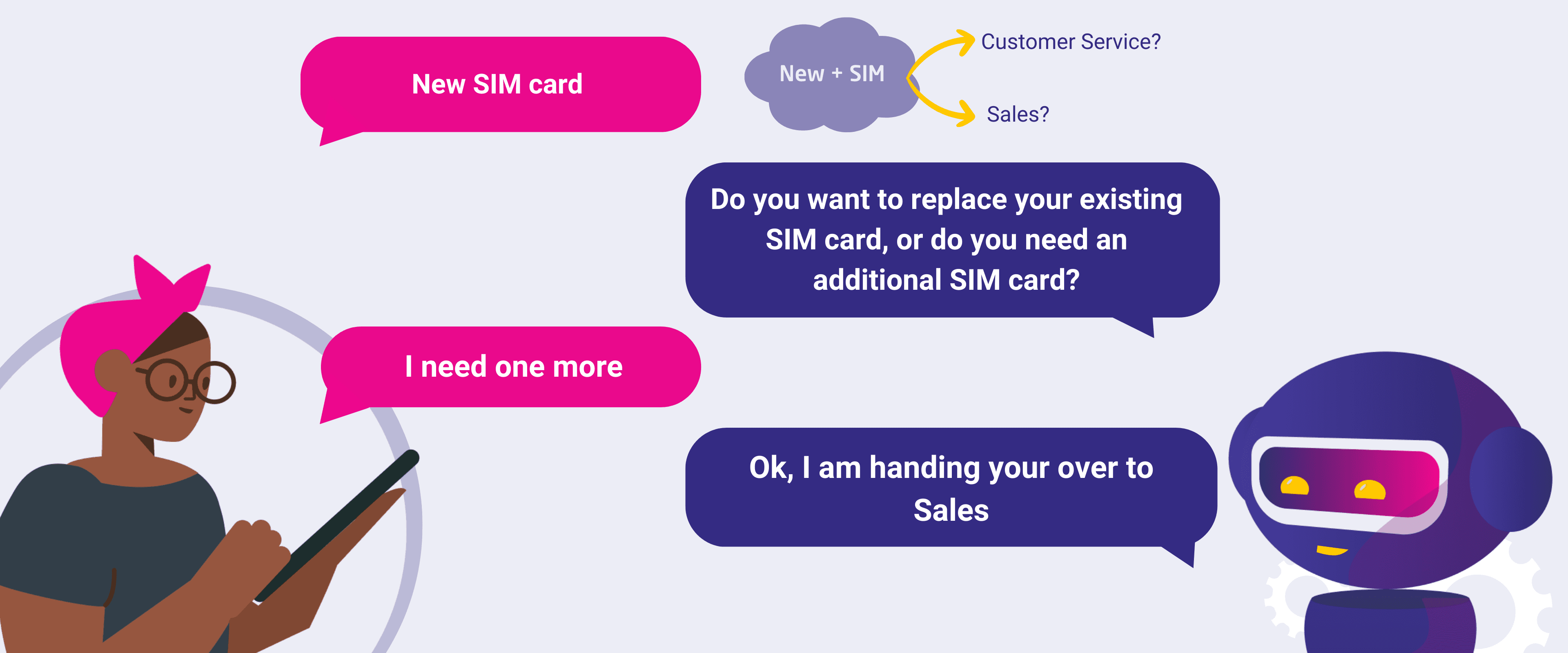
We’re living in a digital era. Despite this, the voice channel still holds a pivotal role in customer communication. It defies the forecasts that predicted its importance would wane. Voice calls maintain their status as the most convenient and efficient communication channel. Coupled with new technologies influencing IVR self-service and voice self-service, significant advancements are on the horizon.
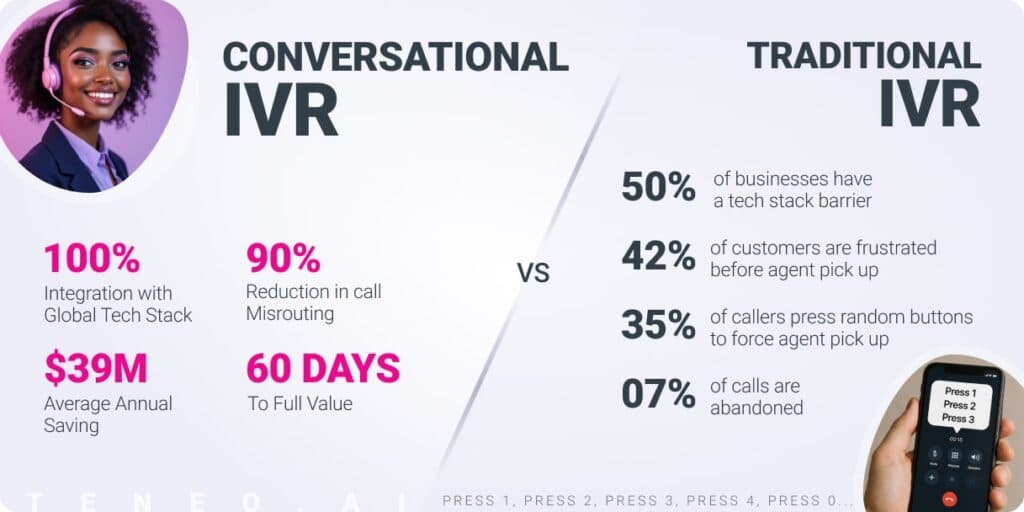
Moreover, customer expectations are evolving. They demand swift and efficient service more than ever. At the same time, worries about identity theft have boosted their trust in the voice channel. Businesses are on a mission. They aim to improve customer experience, safeguard personal data, and control costs. In this pursuit, they’re turning to IVR self-service solutions and voice self-service technologies. IVR self-service is transforming how organizations handle customer interactions at scale.
What is IVR Self-Service?
IVR self-service refers to automated telephony systems that enable customers to resolve inquiries without agent assistance. Unlike traditional call routing, IVR self-service solutions combine voice recognition, natural language processing, and intelligent automation to handle complete customer interactions. Voice self-service technology has evolved from simple menu navigation to sophisticated AI-powered systems that understand caller intent and provide personalized responses.
Modern self-service IVR systems offer significant advantages over legacy solutions, including reduced operational costs, 24/7 availability, and improved customer satisfaction. Organizations implementing IVR self-service solutions typically see a 30-50% reduction in call center costs while maintaining or improving service quality.
The Importance of IVR Self-Service Solutions
IVR self-service (Interactive Voice Response) serves as the foundation of modern voice self-service systems, employing touchtone (DTMF) or automated speech recognition (ASR) technologies. A well-designed self-service IVR performs essential functions, including intelligent call routing, caller identification, customer segmentation, and complete customer service interactions without human agent involvement. Implementing effective IVR self-service solutions enables businesses to reduce costs, improve customer service, and ensure operational efficiency.
Ready to transform your customer service? Book a Demo to see our IVR self-service solutions in action.
Advantages and Disadvantages of IVR Self-Service
IVR self-service solutions offer significant advantages, such as cost reduction, freeing agents from repetitive tasks, shorter queue times, and enhanced customer satisfaction. Voice self-service systems handle routine inquiries automatically, allowing human agents to focus on complex customer needs. However, poorly designed systems can also present challenges, including inflexibility, long-winded menus, perceived low customer value, and increased session abandonment rates. To address these drawbacks, businesses should focus on designing user-friendly IVR self-service menus, finding the right balance between automation and live agent support, and providing clear exit paths to human assistance.
Harnessing Voice Self-Service Technology and Cloud-Based IVR Solutions
While DTMF-based IVR self-service has proven successful, modern voice self-service with automated speech recognition (ASR) provides greater flexibility and functionality, bridging the gap between digital and voice interactions. Despite initial cost and ongoing support considerations, cloud-based IVR self-service solutions offer an alternative by reducing upfront investment and providing on-demand access to telephony resources. These solutions overcome capital investment hurdles and offer operational flexibility without additional costs for system upgrades.
Unlocking the Potential of IVR Self-Service Solutions
IVR self-service adoption varies across sectors, with finance and the public sector leading the way in implementing comprehensive voice self-service solutions. Large contact centers are more likely to offer IVR self-service compared to mid-sized and small centers. On average, about 33% of calls are handled entirely through self-service IVR without agent involvement. Where Teneo has proven to contain over 90% of the calls with a customer. However, not all calls are suitable for automation, as complex inquiries or customer preferences for human assistance may require live agent support.
Types of IVR Self-Service Solutions
Not all IVR self-service solutions are created equal. Understanding the different types can help you choose the right fit for your business needs:
- Cloud-Based IVR Self-Service: Hosted by a third-party provider, these solutions offer scalability, flexibility, and lower upfront costs. They are ideal for businesses of all sizes that want to avoid the complexities of managing their own infrastructure.
- On-Premise Self-Service IVR: These systems are hosted on-site, giving businesses complete control over their data and infrastructure. They are a good choice for organizations with strict security requirements or those that need deep integration with existing legacy systems.
- Hybrid Voice Self-Service: This approach combines the best of both worlds, with some components hosted in the cloud and others on-premise. This allows businesses to leverage the scalability of the cloud while maintaining control over sensitive data.
- AI-Powered IVR Self-Service Solutions: The most advanced option, these systems use artificial intelligence and machine learning to understand natural language, personalize interactions, and continuously improve over time. They are the future of voice self-service.
Enhancing Customer Adoption and Experience with Teneo
Introducing Teneo Conversational IVR, an advanced IVR self-service solution that combines AI-powered voice self-service with smart call routing for complete contact center transformation. Powered by the Teneo Platform, our Conversational IVR streamlines customer interactions and improves operational efficiency with its easy module installation.
How Teneo Works
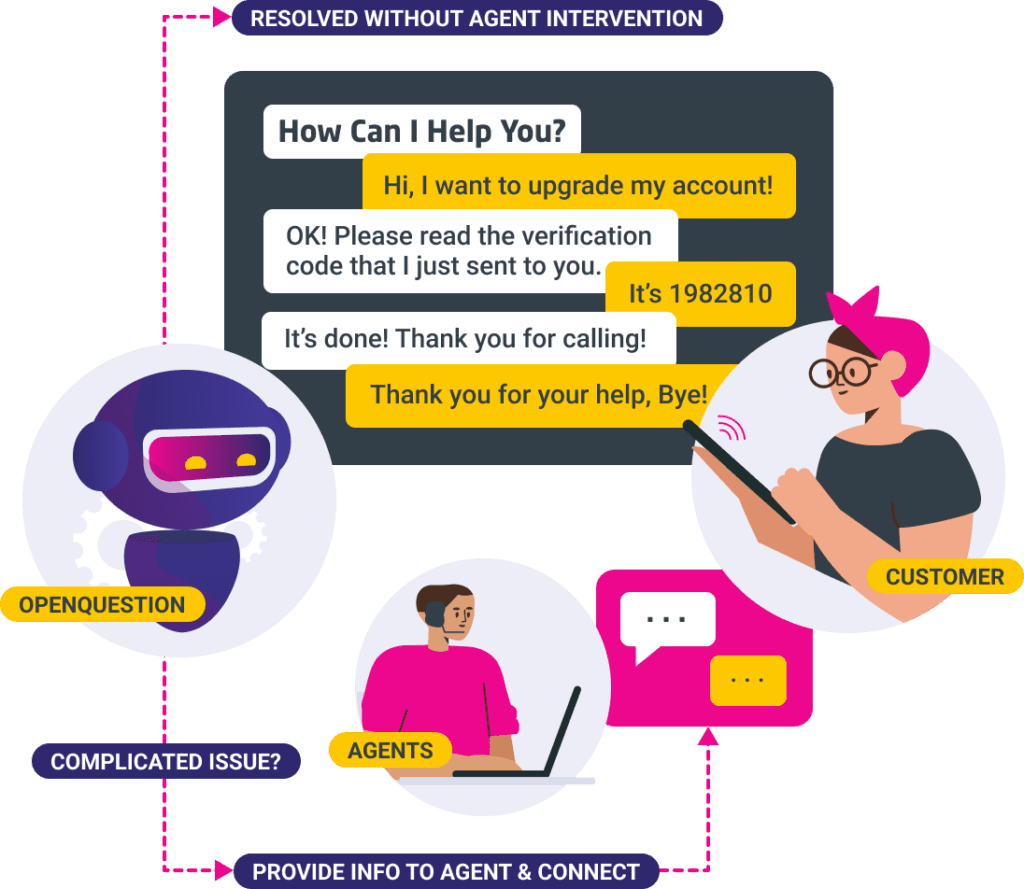
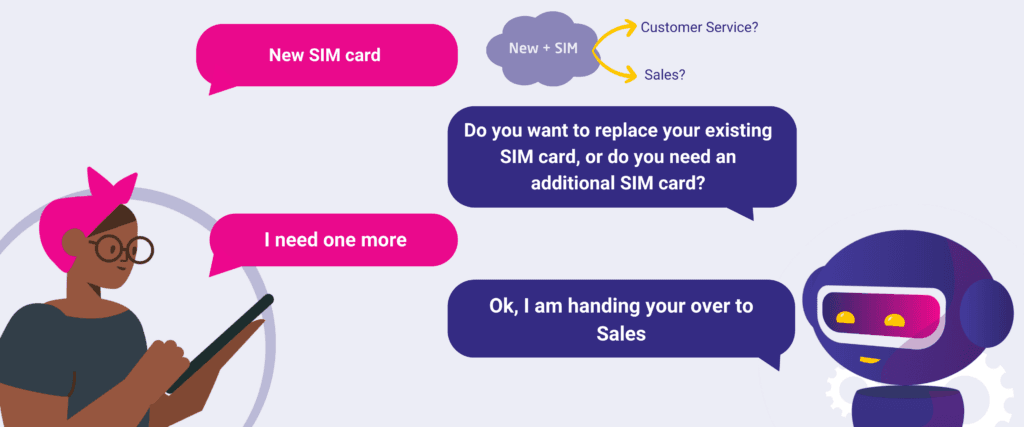
Teneo Conversational IVR utilizes cutting-edge AI technology, including Teneo’s Linguistic Modeling Language (TLML)™ and conversational context understanding. By asking the question, “How can I help you today?” Teneo intelligently routes customers to the most suitable agents, reducing average handling time and providing agents with relevant information before they pick up the call.
Cost-Effective and Simple Installation
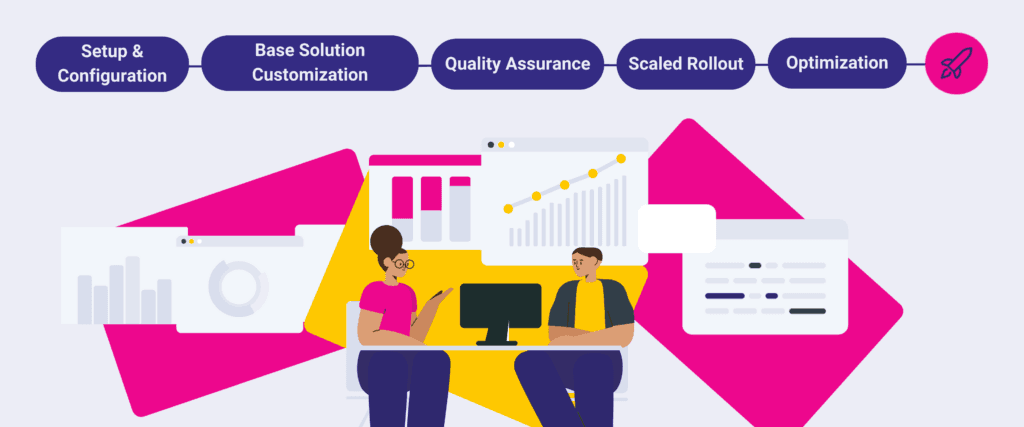
Teneo Conversational IVR offers a cost-effective and simple installation process. Its subscription model ensures you pay only for what you use, based on a basic fixed cost and call volumes.
The Impact of Teneo
Numerous organizations have experienced significant benefits after implementing Teneo Conversational IVR. A global top 5 tech company projected a $39 million return on investment, along with a 30% reduction in misrouted calls and a 2-minute decrease in average handling time. Teneo replaced failing keypad navigation, improving overall customer satisfaction.
Curious about your potential savings? Calculate Your ROI with our AI ROI Calculator.
AI-Powered IVR Self-Service vs. Traditional IVR Systems
Traditional IVR self-service systems rely on generalized number menus that often fail to provide callers with relevant options. They also lack the ability to provide specific call information to agents before the call is answered, resulting in prolonged handling times and subpar customer experiences. Modern IVR self-service solutions like Teneo address these limitations by leveraging advanced AI technology to understand caller intent and provide a range of intelligent automated handling options.
Teneo Functionalities
- Accuracy Booster: Leverages advanced AI techniques to interpret caller intent accurately.
- Agent Connect: Swiftly routes customer calls to the most suitable agents, providing them with relevant request details in advance.
- Future Proof: Designed for platform independence, allowing seamless integration with existing technology infrastructure.
- Seamless Integration: Easily integrates with various platforms, including Amazon Connect, Genesys Cloud CX, Google Cloud, and Microsoft.
- Feedback Insight: Provides valuable feedback insights to optimize performance and enhance customer experience.
- Data Security: Prioritizes data security, ensuring the protection of sensitive customer information.
- Rapid Deployment: Offers rapid deployment, enabling quick implementation and transformation of contact centers.
- Call Insight: Provides actionable insights into call data, helping businesses make informed decisions.
Choosing the Right IVR Self-Service Solution
Selecting the right IVR self-service solution is crucial for success. Here are some key factors to consider:
- Business Goals: What are you trying to achieve? Are you looking to reduce costs, improve customer satisfaction, or both?
- Customer Needs: What are your customers’ expectations? Do they prefer self-service, or do they want the option to speak to a human agent?
- Technical Requirements: What are your existing infrastructure and systems? Will the new solution integrate with them?
- Vendor Reputation: What is the vendor’s track record? Do they have experience in your industry?
By carefully considering these factors, you can choose an IVR self-service solution that meets your needs and delivers a positive return on investment.
Transforming Contact Centers with IVR Self-Service Solutions
Teneo, connected with the latest Azure and OpenAI generative AI technologies, empowers businesses to transform their contact centers into dynamic, manageable, and adaptable operations.
Swisscom, Europe’s largest contact center, achieved major growth by implementing Teneo Conversational IVR. They experienced a 21% increase in correct transfers, an 18-point rise in tNPS (transactional Net Promoter Score), and successfully handled 9 million calls per year in 4 languages.
IVR self-service solutions, powered by advanced AI technologies like Teneo, offer businesses the opportunity to enhance customer experience through intelligent voice self-service, protect sensitive data, and reduce operational costs.
By leveraging IVR self-service, voice self-service technology, and cloud-based solutions, organizations can streamline their customer interactions and optimize operational efficiency. Implementing an AI-driven IVR self-service solution like Teneo Conversational IVR ensures accurate call routing, improved agent connectivity, and customer satisfaction.
Embrace the transformative power of IVR self-service and take your contact center to new heights with Teneo Conversational IVR.
Have questions? Contact Us to speak with one of our experts.
Frequently Asked Questions (FAQ)
What is IVR self-service?
IVR (Interactive Voice Response) self-service is a technology that allows customers to interact with a company’s phone system using their voice or keypad to resolve their own inquiries without speaking to a human agent. It automates tasks like checking account balances, paying bills, or tracking orders.
How do IVR self-service solutions work?
IVR self-service solutions use a combination of technologies, including speech recognition (ASR) to understand spoken requests, DTMF (touch-tone) for keypad input, and integration with backend systems to retrieve and provide information. Modern solutions use AI and natural language processing to understand user intent and provide more human-like interactions.
What are the benefits of voice self-service?
The main benefits of voice self-service include 24/7 availability, reduced customer wait times, lower operational costs by automating routine tasks, and increased agent efficiency by freeing them up to handle more complex issues. It can also improve customer satisfaction by providing quick and easy answers to common questions.
How much do IVR self-service solutions cost?
The cost of IVR self-service solutions varies widely depending on the complexity of the system, the number of calls handled, and whether it is a cloud-based or on-premise solution. Cloud-based solutions typically have a lower upfront cost and a subscription-based pricing model, while on-premise solutions require a larger initial investment in hardware and software.
What is the difference between IVR and Conversational IVR?
Traditional IVR systems rely on rigid, menu-based navigation (e.g., “Press 1 for sales, Press 2 for support”). Conversational IVR, like Teneo Conversational IVR, uses AI to understand natural language, allowing customers to state their needs in their own words (e.g., “I want to check the status of my order”). This results in a more intuitive and efficient customer experience.