
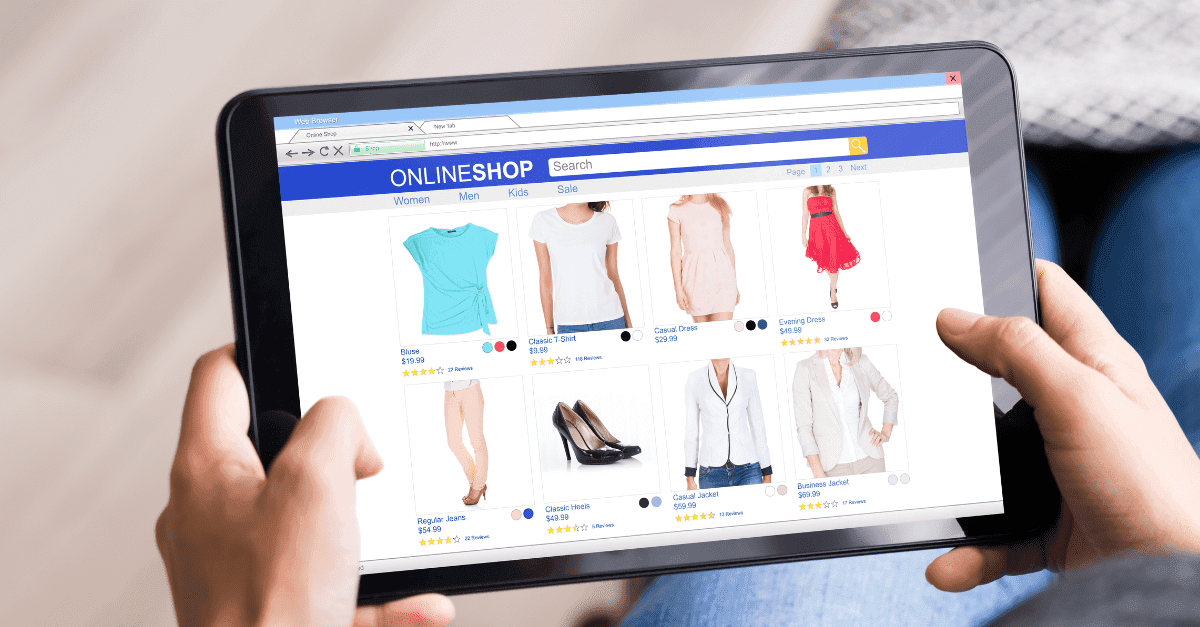
Picture a typical day in a modern retail operation: a surge of “Where is my order?” inquiries, product questions coming in from multiple channels, and store teams juggling tasks while customers expect immediate answers. Even the best-run operations feel the pressure. Customers move seamlessly between digital and physical channels—and they expect your business to keep up.

This is why AI in e-commerce and broader AI in the retail industry has moved from experimentation to necessity. Enterprises are using AI to reduce operational bottlenecks, deliver more consistent experiences, and improve key metrics like CSAT, FCR, AHT, and conversion.
This guide breaks down why AI matters now, the use cases that deliver real value, and how platforms like Teneo.ai support enterprise-scale transformation.
Why AI Matters Now in Retail and E-Commerce
Risk of falling behind
Black Friday and Cyber Monday are now behind us, and the numbers tell an impressive story. According to Reuters, U.S. shoppers spent a record 11.8 billion dollars online during Black Friday 2025, marking a 9.1% year-over-year increase, while Cyber Monday spending is expected to reach roughly 14 billion dollars. At the same time, FedEx reports that 97 percent of large retail companies are using AI this holiday season—powering everything from chatbots and audience targeting to inventory management and dynamic pricing.
Customer Expectations Have Accelerated
Shoppers expect instant answers about stock levels, product fit, delivery updates, and return policies. Long wait times now directly translate into lost sales and churn.

Omnichannel Journeys Are More Complex
Customers jump from website to app to store and back to chat. Without AI-driven context and automation, these journeys feel fragmented—and expensive to support.
Operational Spikes Are Hard to Manage
Seasonal peaks or flash promotions can cause service volumes to triple. AI gives enterprises a scalable way to absorb demand without adding headcount.
Data Exists, But Activation Is Limited
Retailers have rich data across inventory, orders, loyalty, and behavior. AI is the missing layer that activates this data in real time to guide and support customers.
Core Challenges Retailers Need AI to Solve
1. High-Volume, Low-Complexity Inquiries
Order tracking, returns eligibility, product availability—these account for a large portion of inbound volume and overwhelm teams during peak periods.
2. Inconsistent Customer Experience Across Channels
Different answers on voice, chat, email, and in-store associates damage credibility and customer trust.
3. Growing Product Complexity
From electronics configuration to apparel sizing, customers need assistance that basic automation cannot handle.
4. Legacy Systems and Fragmented Data
OMS, CRM, ERP, and product catalogs often sit in silos. Without AI that integrates deeply, support journeys hit dead ends.
How AI in E-Commerce and Retail Addresses These Issues
AI Automates Customer Service
Enterprise-grade virtual agents now resolve:
- Order tracking and delivery updates
- Returns and exchange initiation
- Product questions and compatibility
- Account, payment, and loyalty queries
With the right integrations, AI delivers real-time, personalized responses—reducing handle time and improving CSAT.
AI Enhances Product Discovery
Retailers use AI to:
- Recommend products based on behavior and preferences
- Guide customers through configurations
- Provide answers that mimic an in-store expert
Better recommendations increase conversion and average order value.
AI Improves Operational Efficiency
From automated inventory checks to intelligent routing in contact centers, AI reduces manual work, speeds up response times, and frees agents to handle high-value tasks.
AI Elevates Agent Productivity
AI-driven tools can summarize customer intent, surface relevant knowledge, and suggest next actions during a handover—cutting AHT and improving consistency.
High-Impact Use Cases for Retail and E-Commerce
1. Intelligent Order Tracking
AI retrieves order status from logistics systems and gives customers instant, personalized updates—deflecting a significant portion of inbound inquiries.
2. Returns and Exchanges Automation
By understanding product type, order history, and policy rules, AI can answer eligibility questions, start return flows, and reduce friction in a key customer moment.
3. Guided Product Selection
From choosing the right laptop to finding the correct shade of cosmetics, AI can replicate an expert sales associate.
4. Inventory and Store Information
AI provides store hours, stock availability, or alternative options—driving foot traffic and reducing agent workload.
5. Loyalty Program Support
AI explains tiers, benefits, points balance, and promotions clearly—removing confusion and increasing program engagement.
What to Look For in an Enterprise AI Platform
When evaluating a solution for AI in e-commerce or the broader AI in retail industry, prioritize:
Essential Capabilities
- True omnichannel support across chat, voice, app, social, and web
- Deep integrations with OMS, CRM, ERP, logistics, and payment systems
- Scalable natural language understanding for complex retail intents
- Analytics that track containment, FCR, CSAT, and revenue impact
- Strong governance including security, auditability, and compliance
Where Teneo.ai Fits into Your AI Strategy
For enterprises seeking reliability, scale, and deep integration, platforms like Teneo.ai provide a strong foundation.
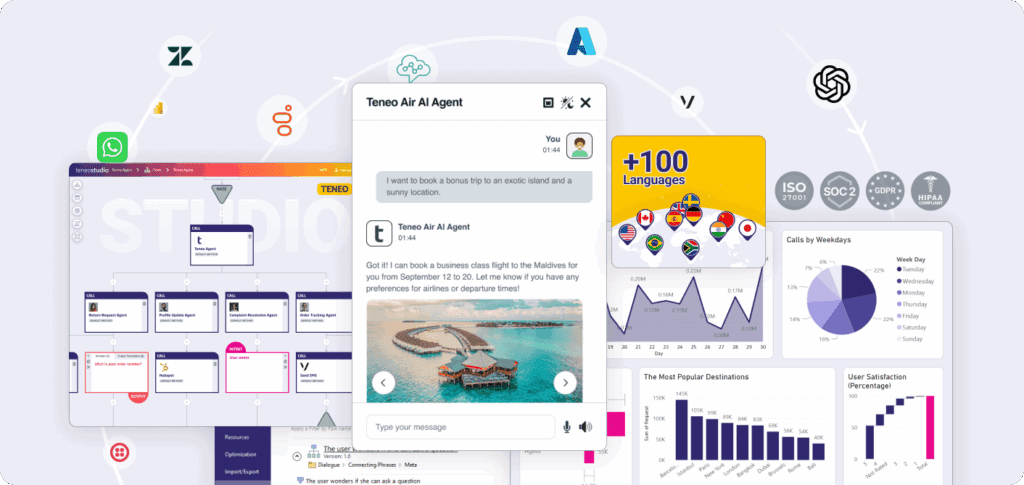
Teneo helps retailers:
- Deploy advanced Agentic AI across voice and digital channels
- Automate high-volume Tier 0 and Tier 1 inquiries with +99% accuracy
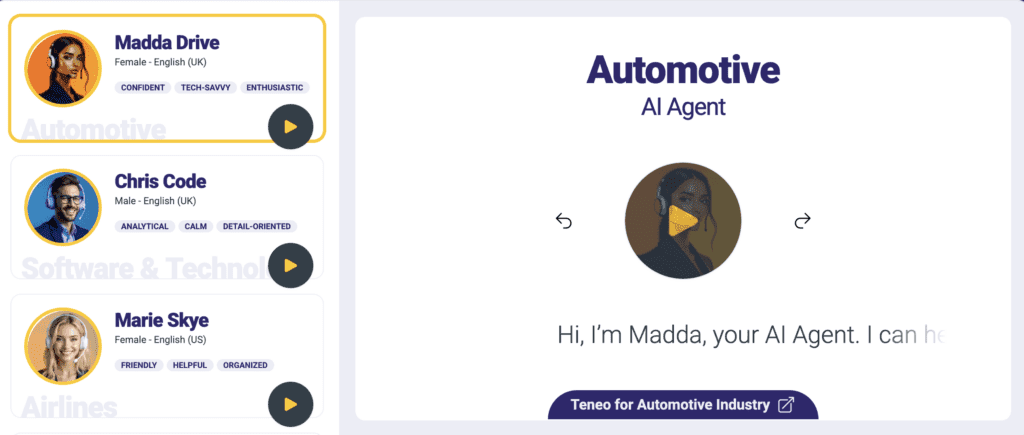
- Connect AI agents tailored for your industry to your systems
- Deliver consistent product and policy information with top tier security certifications.

- Support both customer-facing and agent handover use cases
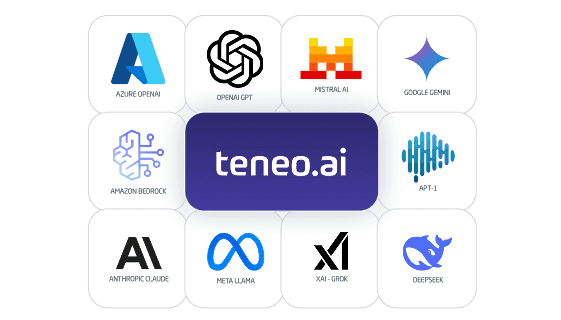
- Deliver LLM orchestration that lets teams switch seamlessly between models, ensuring automation isn’t locked into a single LLM. This means selecting the best model for each task—for example, using OpenAI’s GPT-5.1 for straightforward queries and Anthropic Claude for deeper reasoning or complex workflows. You can find more on which LLM is the best here.
The value is practical: better containment, faster automation, consistent experiences, and smoother peaks—without heavy maintenance.
How to Get Started (Without Overcommitting)
At Teneo, we bring deep expertise in enterprise Agentic AI, and we’re happy to walk you through our approach with no financial commitment.
Here’s how we can support you:
- Map your top customer intents
Focus on the 10–15 journeys that create the most volume or friction. - Assess integration opportunities
Identify which data sources—OMS, CRM, logistics—need to be accessible for automation. - Launch one pilot use case
Order tracking, returns initiation, or product guidance are high-impact places to start. - Scale responsibly
Add channels, expand use cases, and introduce agent assist once the foundation is stable.
Ready to Transform Your Retail Experience?
AI in e-commerce and the retail industry is reshaping how enterprises deliver service, personalize experiences, and operate efficiently. The retailers pulling ahead are those using AI not as hype, but as a practical tool to reduce friction, improve customer outcomes, and simplify operations at scale.
If you’re beginning or evolving your AI journey, start with your most critical customer moments, strengthen your systems foundation, and explore platforms like Teneo that support enterprise-grade automation without compromising governance or customer trust.