

Aviation is an industry where speed, accuracy, and coordination matter more than perfect conditions. Disruptions happen. Demand spikes without warning. Every delay creates thousands of downstream customer and operational impacts in addition to global attention.
This is why AI solutions for aviation are evolving beyond basic automation toward Agentic AI supported by Hybrid AI architectures. Airlines need systems that do not just respond to passengers, but understand context, take action, and do so safely in a highly regulated environment.
Why Agentic AI Matters in Aviation
Traditional AI in aviation has focused on answering questions or routing requests. That approach helps, but it breaks down when passengers need real outcomes: rebooking, refunds, entitlement checks, updates on loyalty programs or coordinated disruption handling.
Agentic AI changes this model. Instead of stopping at conversation, it can:
- Interpret passenger intent in operational context
- Decide on the correct next step using rules and real-time data
- Execute actions across backend systems
- Escalate to human agents only when necessary

In aviation, where most interactions involve changes, exceptions, or time-critical decisions, this ability to act is essential.
The Role of Hybrid AI in Aviation
While generative AI has improved language understanding and flexibility thanks to models like OpenAI GPT-5.2 and Google Gemini 3, aviation requires precision, predictability, and control. This is where Hybrid AI becomes critical.
Hybrid AI combines:
- Generative AI, used where natural language understanding and flexibility add value
- Deterministic, rules-based models, used where accuracy, compliance, and consistency are mandatory
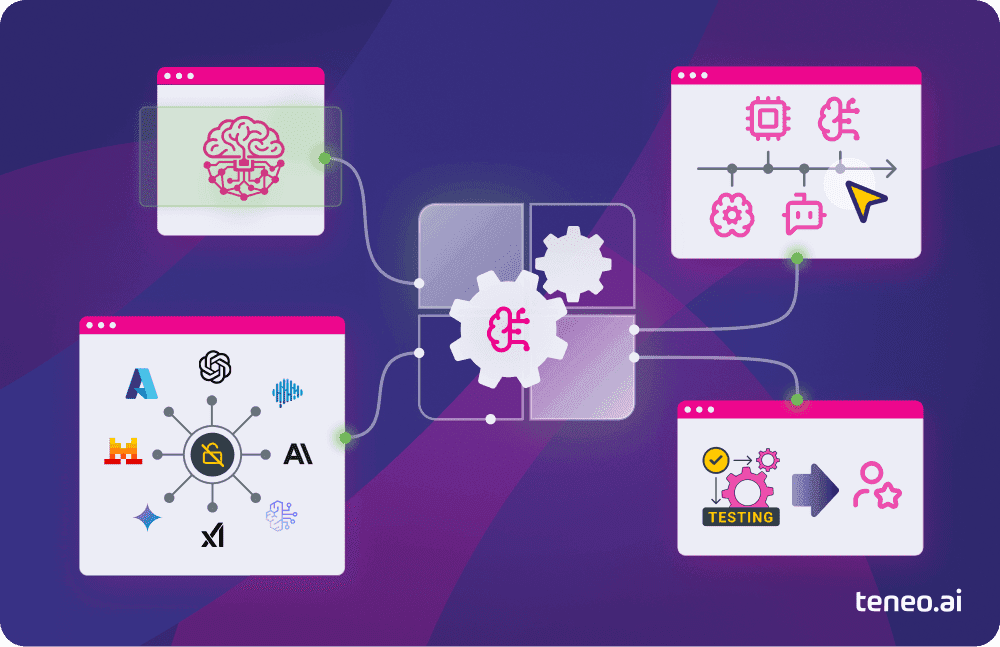
For airlines, this balance is crucial. Generative AI alone can introduce risk if used without guardrails. Deterministic models alone can feel rigid and brittle. Hybrid AI delivers the best of both.
How Agentic and Hybrid AI Work Together in Aviation
Disruption Management at Scale
During delays or cancellations, Agentic AI powered by a Hybrid approach can:
- Detect affected passengers automatically
- Use generative AI to understand free-form passenger requests
- Apply deterministic business rules for eligibility and policy enforcement
- Execute rebooking or compensation actions safely
- Escalate complex or sensitive cases to agents
This allows airlines to manage disruption at scale without sacrificing accuracy or compliance.
Agentic AI in Airline Contact Centers
In contact centers, Agentic AI acts as an orchestration layer rather than a simple chatbot.
Using Hybrid AI, it can:
- Understand intent using generative models
- Execute structured workflows through deterministic logic
- Complete Tier 1 and Tier 2 journeys end to end
- Support agents with automated actions and next-best steps
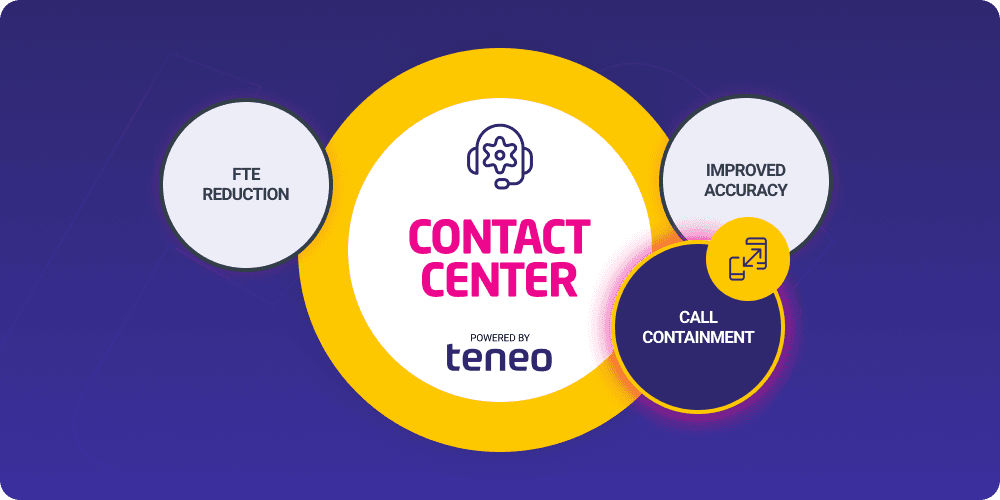
The result is lower cost per contact, shorter handle times, and more consistent policy execution across teams and channels.
Voice and Digital Channels With Control
Voice AI remains critical in aviation, especially during irregular operations. Hybrid Agentic AI enables natural voice and digital interactions while ensuring that backend actions follow strict, auditable logic.
This is essential for maintaining trust during high-stress situations.
What to Look for in AI Solutions for Aviation
When evaluating AI solutions for aviation, enterprise leaders should prioritize:
- True agentic capabilities: The AI must be able to take action, not just respond.
- Hybrid AI architecture: Look for a clear separation between generative understanding and deterministic execution.
- Deep integration: Agentic AI must connect directly to reservation systems, disruption tools, and contact center platforms.
- Governance and safety: Aviation demands traceability, guardrails, and controlled escalation paths.
- Scalability under pressure: The platform must perform during peak travel and mass disruption events. In addition to scale across every language you are present in.
How Teneo.ai Supports Agentic and Hybrid AI in Aviation
Teneo.ai is designed around a Hybrid AI approach, combining generative AI with its proprietary deterministic models to support enterprise-grade Agentic AI.
In aviation environments, Teneo enables:
- Agentic AI that resolves passenger requests end to end
- Generative AI for flexible intent understanding and natural interactions
- Deterministic, proprietary models for policy enforcement, workflow execution, and compliance
- Orchestration across voice and digital channels
- Seamless escalation to human agents with full context
- Support in over 86+ languages, including its dialects and accents
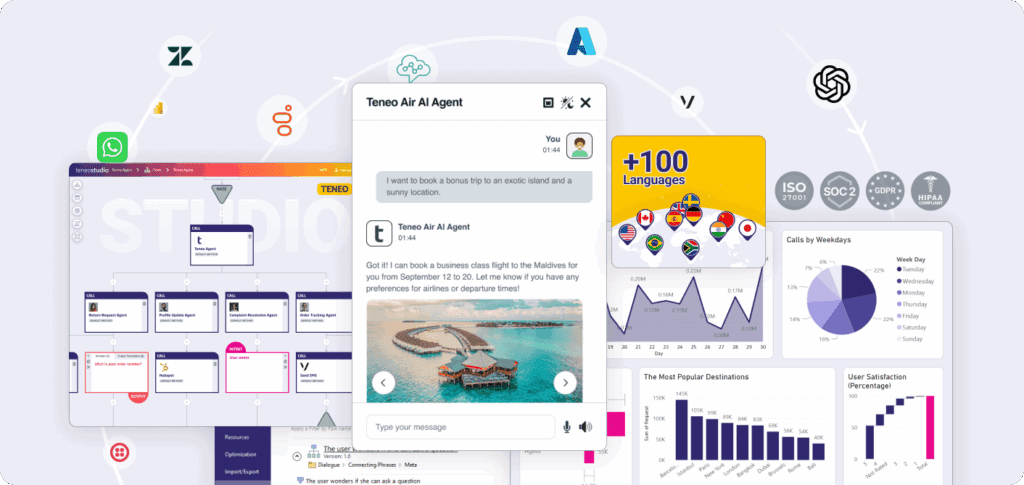
This architecture allows airlines to benefit from generative AI innovation without compromising control or reliability.
Want to learn more?
The future of AI solutions for aviation is not about choosing between generative or rules-based AI. It is about combining them intelligently.
Agentic AI, powered by a Hybrid AI architecture, gives aviation organizations the ability to act at machine speed while operating within the constraints of a complex, regulated industry.
For airline leaders, this approach is becoming a foundation for operational resilience, cost efficiency, and consistent customer experience at scale.