

The aviation industry operates on razor-thin margins and unpredictable schedules. For airline executives, the true test of operational resilience—and a brand’s value—occurs not in the cockpit, but in the contact center.
When a single weather event or technical glitch disrupts the network, call volumes can spike by 300% to 500% instantly, causing hours-long hold times that damage customer loyalty and erode profits. In this context, AI in aviation is not just about efficiency; it is the ultimate tool for customer retention and service recovery.

Today, advanced Conversational AI is moving beyond simple chatbots to become fully Agentic AI with models like Google Gemini 3 and OpenAI GPT-5.2 helping along the way—systems capable of understanding complex human intent, accessing back-end airline systems, and taking decisive action.
Here are 5 critical ways AI is reshaping the skies by revolutionizing how airlines interact with their most valuable asset: the passenger.
1. The End of Chaos: Handling Irregular Operations (IROPS) at Scale
Historically, IROPS (delays, cancellations, and diversions) are the single biggest point of failure for airline customer service. Human contact centers simply cannot scale fast enough to meet the demand surge, leading to passenger frustration and massive compensation costs. We constantly see these things show up on our timeline when a storm or global event cancels every flight and passengers are stranded at the airport.
AI Agents solve this by providing instant, empathetic service at any volume.
- Real-Time Rebooking: When a flight cancels, an AI Agent can instantly access the passenger’s PNR (Passenger Name Record), check real-time seat inventory, and present compliant rebooking options.
- Automated Vouchers: The system can automatically issue hotel, meal, or transportation vouchers according to IROPS policy and send them directly to the passenger via SMS or the mobile app, reducing human agent effort.
The ability for a passenger to rebook their entire itinerary in the app or via a voice assistant, using Voice AI—without waiting on hold—transforms a moment of crisis into a seamless recovery experience.
2. Hyper-Personalization: Turning Transactions into Relationships
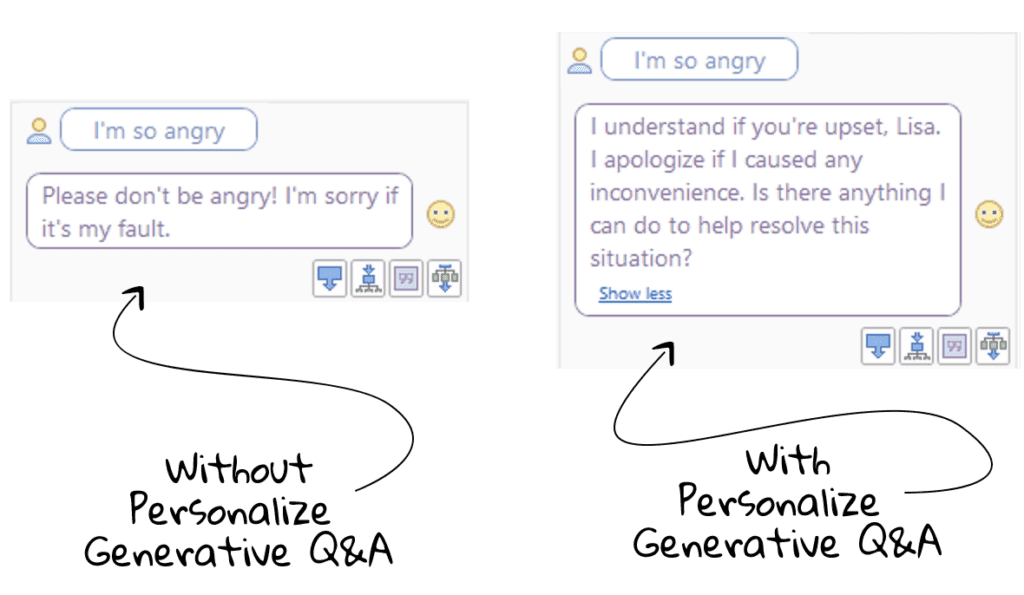
Modern travelers expect their experience to be tailored, yet legacy airline systems often treat every passenger identically, following a strict script no matter the circumstances. AI in aviation unlocks true hyper-personalization by analyzing behavioral data, loyalty status, and past interactions in real-time.
- Contextual Offers: An AI Agent can recognize a high-value loyalty member and proactively offer a complimentary lounge pass during a long layover, or suggest a paid upgrade tailored to a passenger’s recent booking history.
- Proactive Communication: Instead of generic alerts, the AI can push a message to a passenger waiting at the gate: “We see you have a tight 45-minute connection. Your next flight’s gate has changed from A14 to C38; here are the fastest walking directions.”
This level of detail creates a perception of care, significantly boosting customer satisfaction scores (CSAT) and lifetime loyalty.
3. AI Agent: Elevating Human Staff to Super-Agents
The goal of AI is not to replace human agents, but to enhance and empower them to focus on high-value, high-empathy interactions. AI Agents can now be used as an essential tool for human support staff.
- Instant Knowledge Retrieval: When a passenger asks about a complex fare rule or baggage regulation for an international connection, the AI Agent instantly searches and summarizes the exact policy, eliminating the need for the agent to navigate slow, fragmented internal systems.
- Response Drafting: The AI drafts empathetic, accurate, and on-brand responses for email or chat in seconds, reducing Average Handle Time (AHT) and allowing the agent to manage multiple complex cases simultaneously.

This dramatically improves First Call Resolution (FCR) rates, reducing agent burnout and creating a consistent service experience.
4. Omnichannel Consistency: A Seamless Journey, Anywhere
Passengers interact with an airline across a dozen touchpoints: the website, the mobile app, social media, voice calls, and airport kiosks. Any break in context—where a passenger has to repeat their issue—is a loyalty killer.
Advanced Agentic AI platforms create a single, unified “brain” for the customer experience.
- Context Persistence: If a passenger starts a conversation on the mobile app, calls the contact center minutes later, the AI immediately surfaces the full context of the previous interaction, regardless of the channel switch.
- 24/7 Global Support: AI Agents provide multilingual, round-the-clock support in the channels customers prefer (WhatsApp, Messenger, SMS), ensuring passengers in any time zone or country get an immediate response.
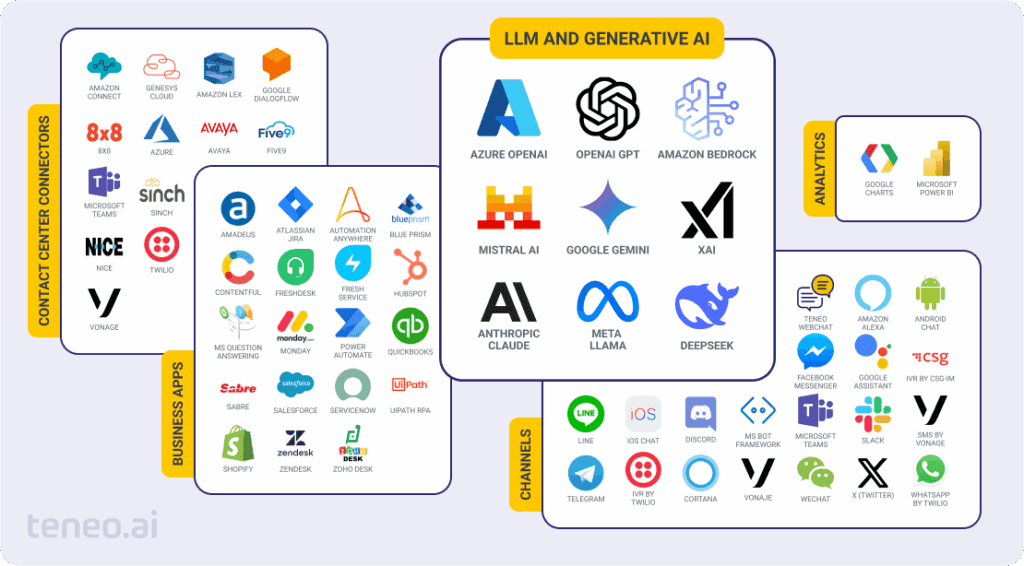
This unified approach ensures that every interaction, everywhere, adheres to the same high standard of accuracy and policy.
5. From Call Center to Profit Center
The most compelling business case for AI in aviation is the shift from viewing customer service as a sunk cost to treating it as a revenue generator.
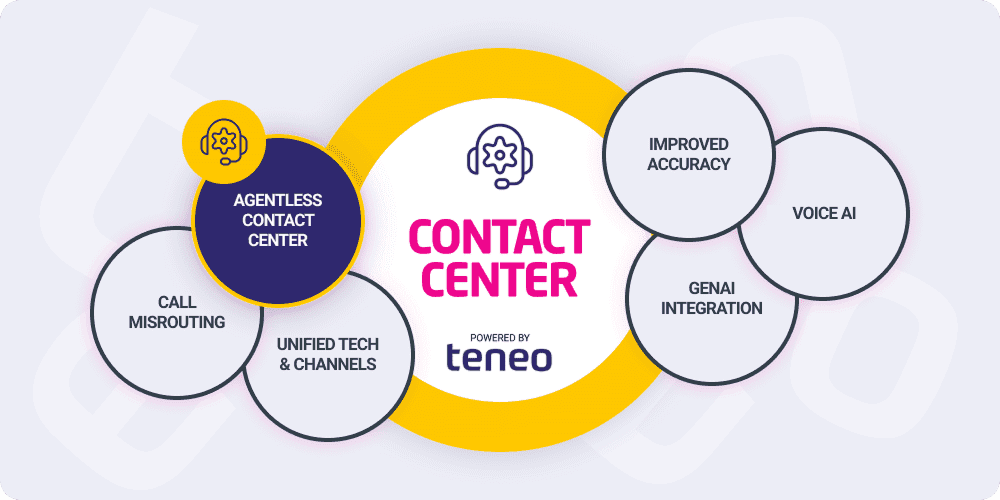
By automating high-volume service tasks, airlines dramatically lower their Cost-to-Serve (CTS). Furthermore, a skilled AI Agent can be trained to recognize cross-sell and up-sell opportunities, turning a service inquiry into a revenue moment.
- Ancillary Revenue: When a passenger calls to change their flight, the AI Agent can proactively offer to add checked bags, purchase seat assignments, or upgrade to a premium economy fare before completing the transaction.
- Data-Driven Insights: AI constantly analyzes conversation data to identify major customer pain points and process failures, providing the airline with actionable intelligence to fix root causes and prevent future calls entirely.
Want to learn more?
The new altitude of customer service in aviation is defined by autonomy and intelligence. Airlines that deploy sophisticated, Agentic AI are not just cutting costs; they are building operational resilience and forging deeper passenger loyalty, especially during the crucial moments of disruption.
The choice for leaders is clear: stick to legacy systems that buckle under pressure, or embrace a unified AI platform that can scale empathy and deliver flawless service from the ground up.
Want to learn more about AI in Aviation? Contact us to learn more.