

Large Language Models (LLMs) are rapidly moving from experimentation to production across European enterprises. What was once confined to innovation labs is now shaping core operating models in customer experience, service operations, and knowledge work.
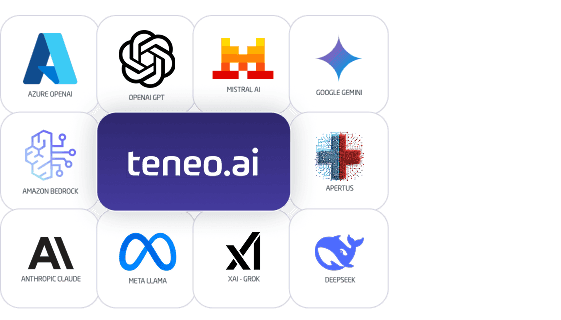
In Europe, the rise of LLMs follows a distinct and deliberate path. Adoption is driven less by headline-grabbing model launches and more by enterprise requirements around governance, multilingual performance, regulatory compliance, and risk management. This has created a European LLM landscape where progress is measured not only by capability, but by how well AI systems can be controlled, integrated, and trusted in real operating environments.
Rather than focusing on standalone models, European organizations are increasingly treating LLMs as components within broader, well-governed systems.
Europe’s LLM momentum is real and structurally distinct
LLM adoption across Europe is accelerating, but it is shaped by conditions that are specific to the region. These conditions influence how enterprises evaluate, deploy, and scale language models.
Three characteristics define the European LLM landscape:
Regulation-first reality
The EU AI Act is turning AI governance into an execution issue rather than a future concern. Compliance, documentation, and accountability are becoming prerequisites for deployment.

Multilingual and regulated use cases
European enterprises operate across many languages, jurisdictions, and regulatory regimes, often within highly regulated industries such as finance, telecommunications, utilities, and the public sector. In European Union alone, there are 24 official languages.

Enterprise accountability
Boards and senior executives are directly accountable for AI outcomes in customer-facing and decision-support systems. This elevates AI risk from a technical issue to a leadership concern. All while GDPR is another regulation to be aware of that the LLMs has a challenge with.

As a result, LLM success in Europe depends less on raw model capability and more on governance, predictability, and operational control.
European LLM signals: Mistral and Apertus
The rise of LLMs in Europe is best understood through concrete examples that reflect different strategic approaches rather than direct competition.
Mistral: building a European commercial LLM ecosystem
France-based Mistral AI has emerged as one of Europe’s most visible commercial LLM providers, offering a growing portfolio of models across sizes and use cases. Its trajectory reflects a broader European ambition to develop regionally anchored AI capabilities that are suitable for enterprise deployment.
From an enterprise perspective, Mistral signals:
- Increasing regional control over critical AI capabilities
- Commercially supported models designed for production use
- Alignment with European expectations around transparency, governance, and data protection

For organizations evaluating LLM adoption, Mistral represents an alternative to full dependency on non-European providers, while still requiring strong governance and operating controls above the model layer.
Apertus: transparency and compliance by design
Another big player for LLMs in Europe is Apertus, a multilingual open LLM initiative originating in Switzerland. Apertus places emphasis on openness, documented development processes, and explicit alignment with European principles around data protection and transparency.

For enterprise leaders, Apertus highlights an important reality:
In Europe, how a model is developed and governed can matter as much as its raw performance.
This approach is particularly relevant for public sector organizations and regulated industries, where explainability, auditability, and long-term risk management outweigh marginal accuracy improvements.
Why orchestration matters as European LLM options expand
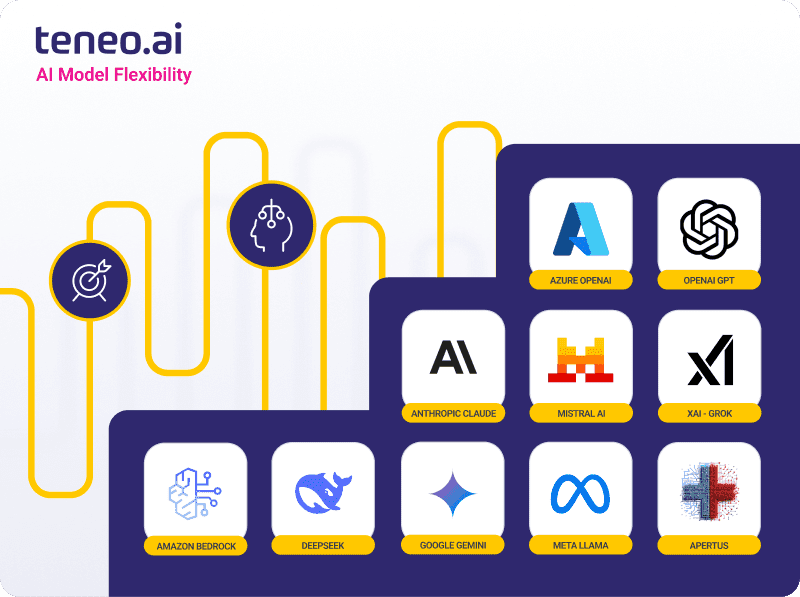
As European LLM providers such as Mistral AI and initiatives like Apertus expand the available model landscape, orchestration becomes a strategic necessity rather than a technical preference.
Orchestration allows enterprises to:
- Route tasks to the most appropriate model
- Apply governance, security, and compliance policies consistently
- Reduce vendor lock-in and long-term dependency risk
- Control costs by using high-capability models only when justified
In a European context, orchestration is essential for balancing flexibility with accountability.
Teneo.ai’s focus on hybrid AI and LLM orchestration directly supports this reality, enabling enterprises to operationalize LLMs without surrendering control. Relevant perspectives include:
What enterprise leaders should do next
To respond effectively to the rise of LLMs in Europe, senior leaders should focus on three priorities:
- Redefine success metrics: Prioritize reliability, compliance, and cost control rather than model novelty alone.
- Invest in governance early: Treat LLM governance as core infrastructure, not an add-on.
- Design for change: Assume that models, vendors, and regulations will continue to evolve.
The European LLM market will continue to expand, but long-term advantage will belong to organizations that treat LLMs as part of a controlled, well-governed system rather than standalone solutions.