
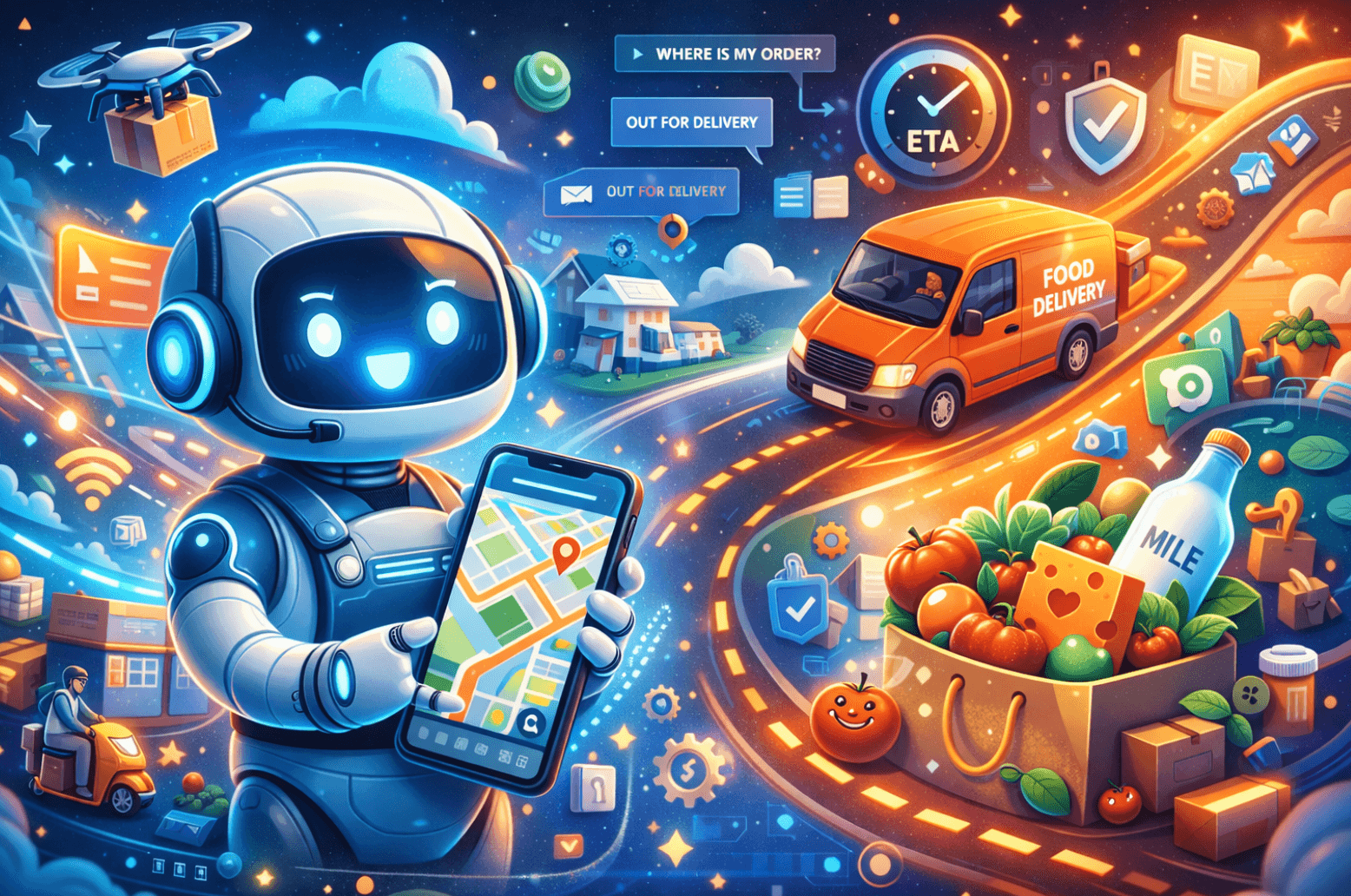
In food and grocery, the last mile is where customer trust is won or lost. When essentials are delayed, substituted, or delivered incorrectly, customers do not wait—they call. For many brands, “Where is my order?” (WISMO) and delivery exception calls now dominate contact volumes, driving up cost-to-serve and straining already complex operations.
AI last-mile delivery has emerged as a critical lever for enterprise brands looking to scale without sacrificing experience or control. But as with other regulated or operationally sensitive domains, not all AI is fit for purpose.
Why last-mile delivery is an enterprise-scale problem
Last-mile delivery is uniquely unforgiving. Time windows are tight, data changes constantly, and small execution failures cascade quickly into high-volume support demand.
Common drivers of contact include:
- Missed or unclear delivery time windows
- Customers unsure when a courier will arrive
- Address mismatches or missing access instructions
- Substitutions, partial deliveries, or missing items
- Delays caused by weather, traffic, or picking constraints
In most organizations, these issues are handled across fragmented systems: CCaaS platforms, courier apps, order management systems, and third-party delivery partners. The result is inconsistent answers, repeated escalations, and unnecessary agent involvement.
AI last-mile delivery must operate across this complexity—not sit on top of it.
Why traditional automation struggles with delivery support
Many food and grocery brands already use IVR or basic chatbots to deflect WISMO calls. These tools help at the margins but fail under real-world conditions.
The limitations are structural:
- Delivery conversations are dynamic. ETAs change, substitutions appear, and policies differ by order type and geography.
- Decisions are policy-bound. Not every delivery can be rescheduled, refunded, or rerouted.
- Data must be trusted in real time. Outdated status information erodes confidence and increases repeat contacts.
Without deeper orchestration and control, automation simply deflects frustration rather than resolving issues.
What enterprise AI last-mile delivery looks like
Enterprise-grade AI last-mile delivery systems are designed to resolve issues end to end, not just answer status questions.
At the core is Agentic AI or Hybrid AI: AI agents that can take action toward a defined outcome—within strict policy and operational guardrails.
Instead of static flows, agentic AI can:
- Confirm, narrow, or change delivery time windows when permitted
- Coordinate courier arrival, including gate codes and contactless instructions
- Proactively handle delays and rebook deliveries
- Validate and enrich addresses using geocoding and landmarks
- Explain substitutions, capture acceptance or rejection, and trigger next steps
- Initiate cancellations, refunds, or credits based on eligibility rules
Critically, these actions are governed by a deterministic intelligence layer that ensures consistency, compliance, and zero improvisation.
The operating model shift: AI as the first line of delivery support
Leading food and grocery brands are redefining AI’s role in last-mile delivery. Instead of treating it as a deflection tool, they deploy AI as the primary support layer for delivery-related journeys.
This shift delivers measurable operational impact:
- WISMO call volumes drop as customers get accurate, real-time answers without escalation
- Failed deliveries decrease through better coordination and proactive issue handling
- First call resolution (FCR) improves because AI completes the task, not just routes it
- Cost per contact falls sharply, freeing human agents for complex disputes
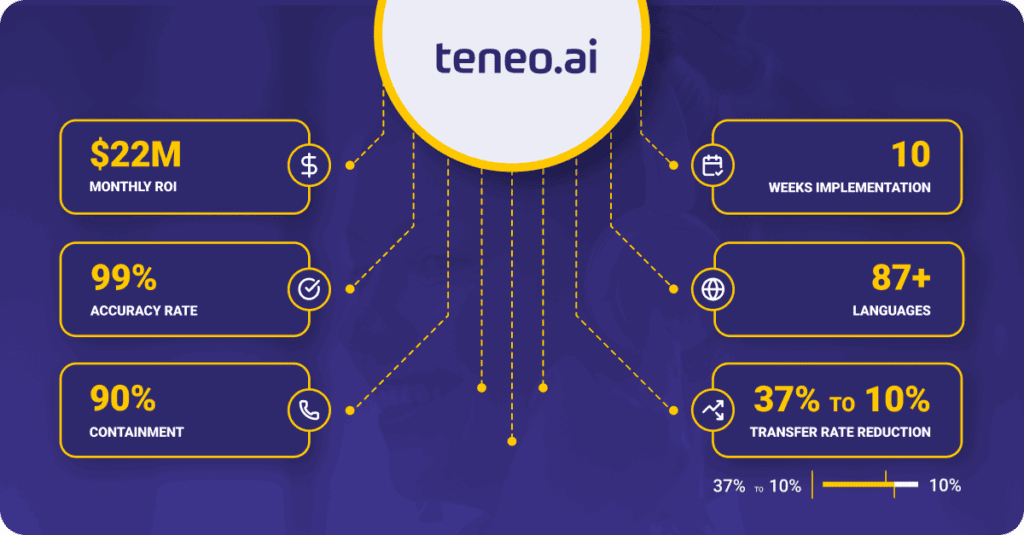
Human agents remain essential—but they are focused on exceptions, high-value customers, and edge cases rather than repetitive delivery queries.
Governance, safety, and trust in AI last-mile delivery
For enterprise leaders, AI last-mile delivery must meet the same governance standards as any customer-facing system.
Three capabilities are non-negotiable.
Deterministic control over outcomes
LLMs that wrap around technology like Google Gemini 3 and OpenAI GPT 5.2 alone cannot safely manage delivery decisions. Enterprise AI must enforce:
- Brand- and region-specific delivery policies
- Eligibility rules for changes, cancellations, and refunds
- Clear escalation boundaries when automation is not allowed
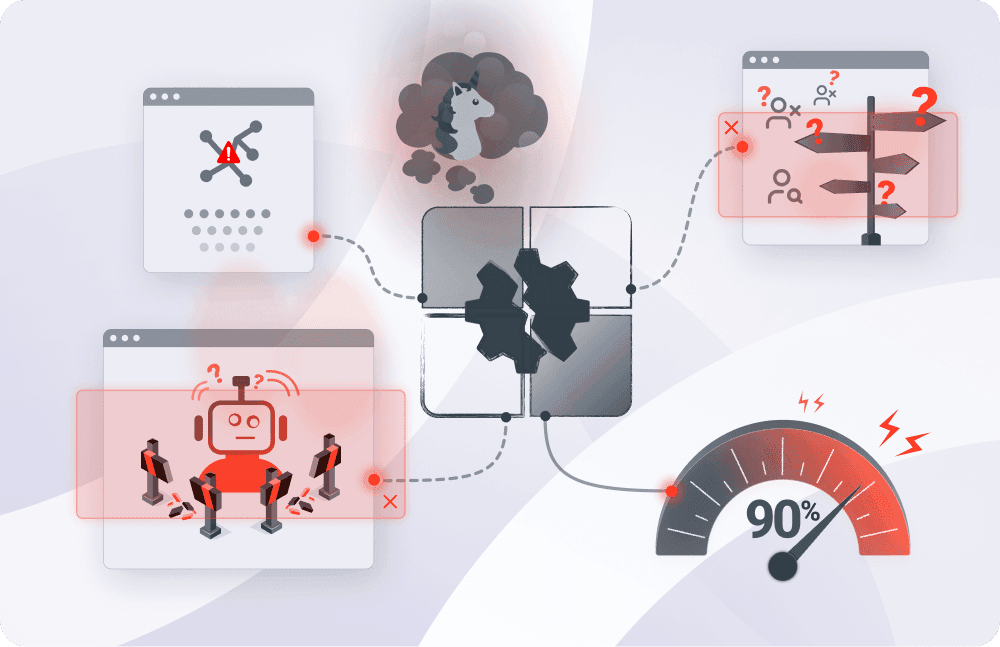
This ensures consistent outcomes regardless of channel, market, or demand peak.
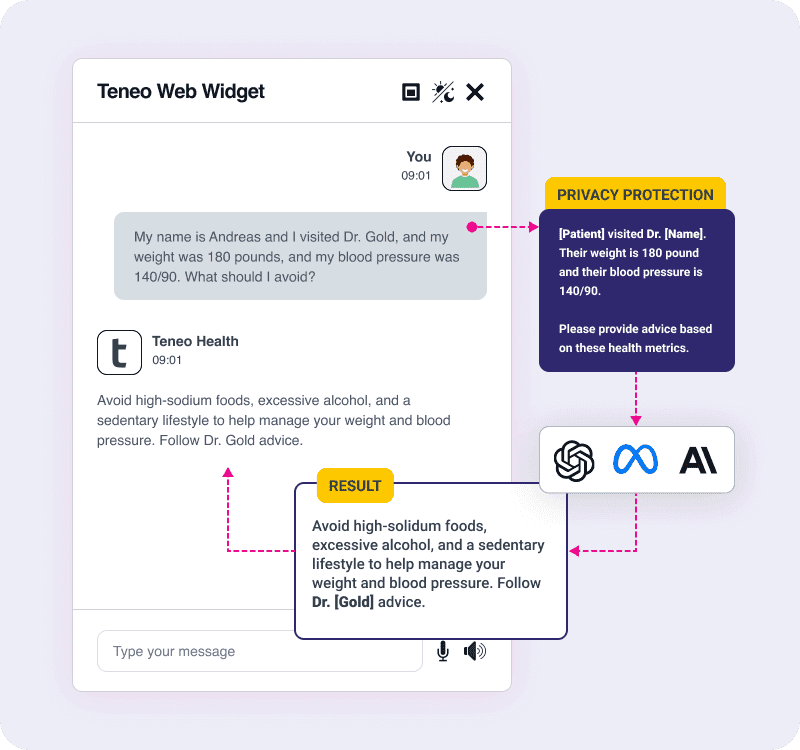
Privacy-safe and auditable interactions
Delivery support often involves personal data, addresses, and in some cases age-restricted items. AI agents must:
- Verify identity before sensitive actions
- Handle personal data in a privacy-safe way
- Provide full transcription and summarization for auditability
Orchestration across a fragmented ecosystem
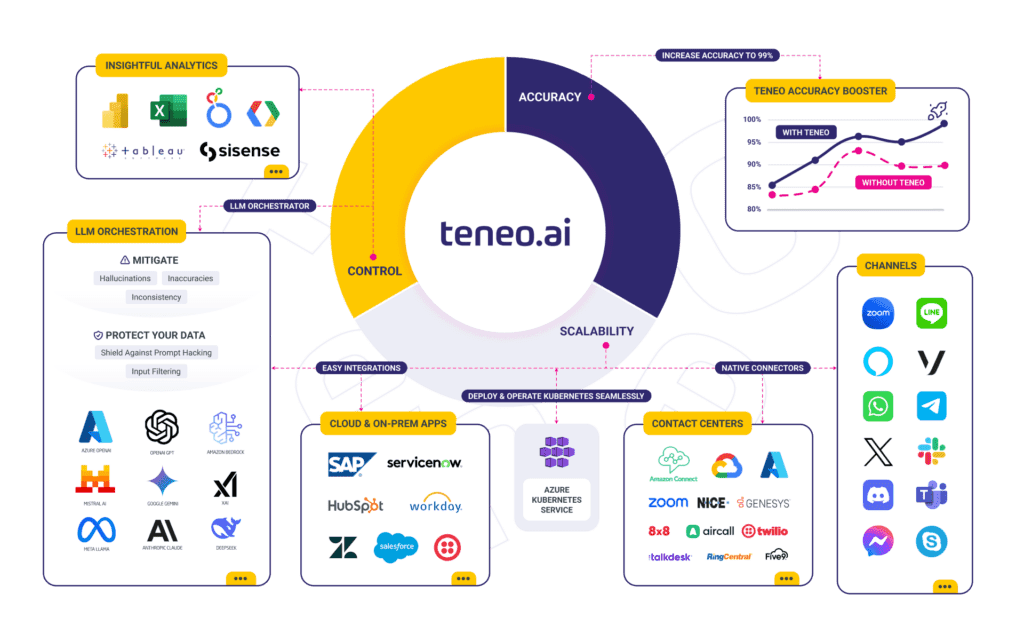
Enterprise delivery operations rarely run on a single system. AI orchestration allows brands to:
- Route intelligently across multiple models for cost and latency control
- Integrate with OMS, courier platforms, CCaaS, and CRM systems
- Maintain a single source of truth across internal teams and partners
See Teneo LLM orchestration for one example,
Why pre-built delivery agents accelerate time-to-value
Building AI Agents to last-mile delivery logic from scratch is slow and risky. Pre-built delivery agents allow enterprises to deploy faster while maintaining control.
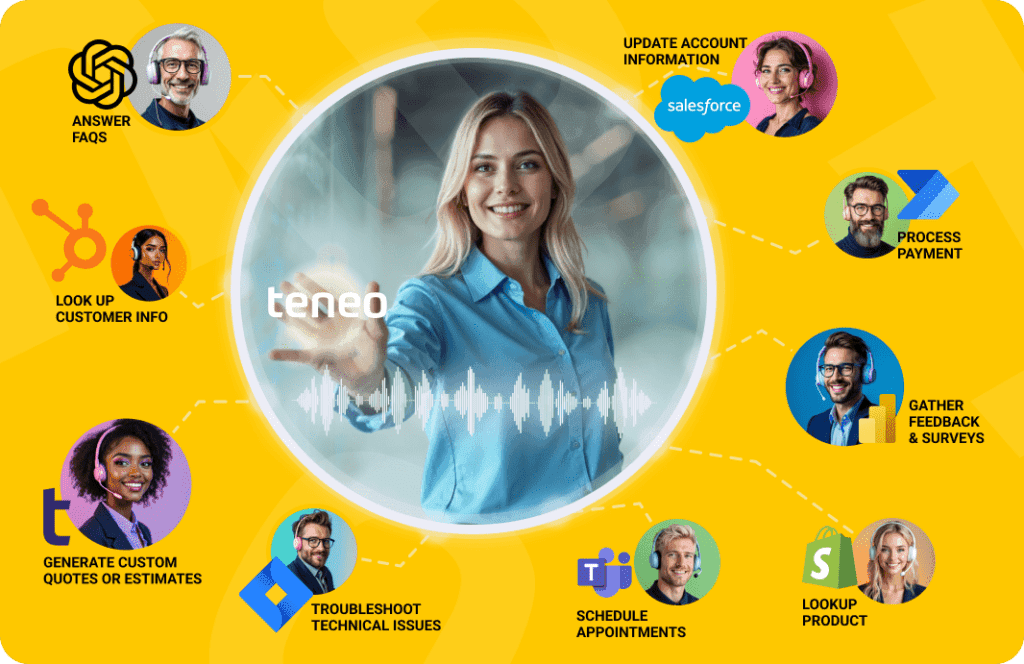
These AI agents typically include:
- Proven delivery and post-delivery workflows
- Embedded exception handling logic
- Support for multilingual markets and regional language variation
- Integration patterns designed for high-volume, peak-demand environments
The result is faster containment uplift without compromising operational discipline.
From reactive support to proactive delivery experience
AI last-mile delivery is not just about reducing calls. It is about changing the delivery experience itself—from reactive and fragmented to proactive and predictable.
When customers receive accurate ETAs, timely updates, and clear resolution paths, trust increases and contact demand falls. For food and grocery brands operating on thin margins, this shift is no longer optional.
The winners will be those who treat AI as a core delivery capability, not a customer service add-on.