
The AI landscape is evolving fast. What started with generative AI creating content is now shifting toward systems that can act, decide, and execute. Enter Agentic AI—a transformative approach that moves beyond assistance into true autonomy.

If you’re trying to understand what this means for your business, this Agentic AI 101 guide breaks it down clearly: what it is, how it works, and why it matters right now.
What Is Agentic AI?
Agentic AI refers to artificial intelligence systems that can autonomously plan, make decisions, and take actions to achieve goals—with minimal human intervention. One example of an Agentic AI platform is Teneo.ai.
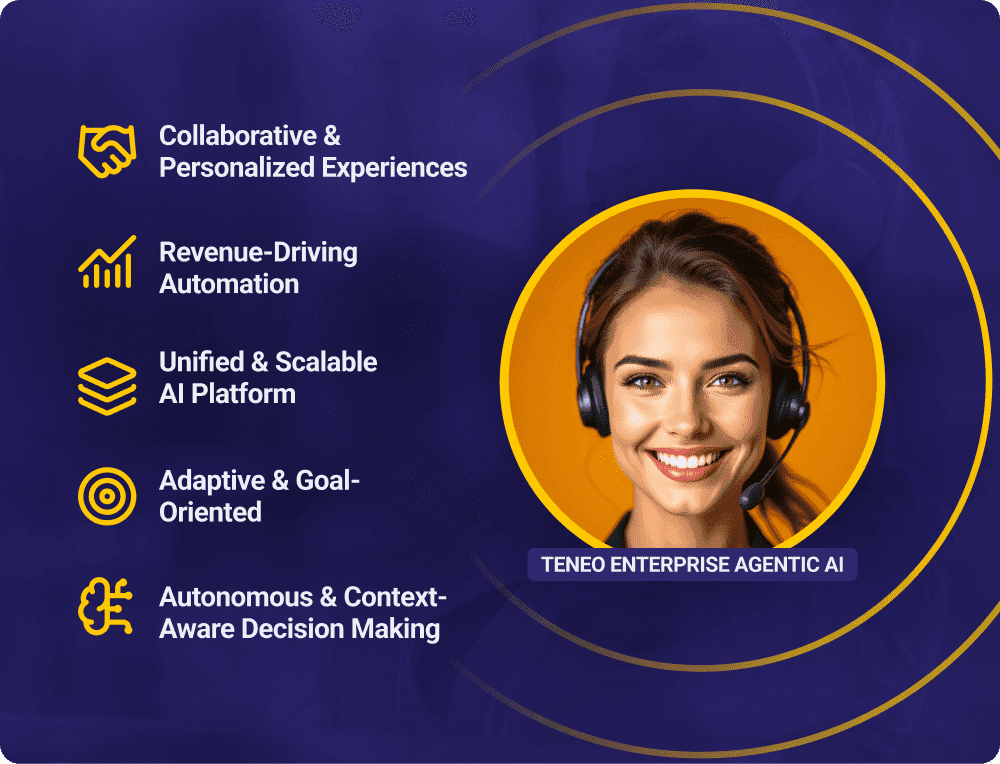
Unlike traditional AI or LLMs like Google Gemini, and even standard AI agents, agentic AI doesn’t just respond to prompts. It:
- Understands objectives
- Breaks them into tasks
- Executes actions across systems
- Continuously learns and improves
How Agentic AI Works: The 4-Step Loop
At its core, agentic AI operates in a continuous cycle that mimics human decision-making:
1. Perception (Sense)
The system gathers data from multiple sources—APIs, databases, user inputs, or real-time signals.
2. Reasoning (Think)
It analyzes the situation, evaluates options, and determines the best course of action.
3. Action (Execute)
The AI takes action using tools, integrations, or workflows—without needing step-by-step instructions.
4. Learning (Improve)
It evaluates outcomes, learns from results, and refines future decisions.
This loop enables agentic AI to handle complex, multi-step processes dynamically.
Core Characteristics of Agentic AI
Agentic AI stands out because of four defining capabilities:
1. Autonomy
It operates independently, reducing the need for constant human oversight.
2. Goal-Oriented Planning
Instead of reacting to prompts, it works toward achieving defined objectives.
3. Tool Integration
It connects with external systems (CRMs, APIs, databases) to take real-world actions.
4. Continuous Learning
It improves performance over time through feedback and reflection.
These characteristics make agentic AI ideal for enterprise-scale automation.
Real-World Use Cases of Agentic AI
Agentic AI is already reshaping how businesses operate. Here are some high-impact applications:
Customer Service Automation
Instead of just answering queries, Agentic AI can help with Customer Service Automation to:
- Analyze customer history
- Coordinate across departments
- Resolve issues end-to-end
Platforms like Teneo AI enable businesses to orchestrate these intelligent workflows seamlessly.
IT & Operations Management
Agentic AI can:
- Detect system issues
- Diagnose root causes
- Execute fixes automatically
This reduces downtime and operational costs.
Sales & Marketing Optimization
It can:
- Analyze customer behavior
- Trigger personalized campaigns
- Optimize conversion strategies in real time
Supply Chain & Logistics
Agentic AI can:
- Monitor inventory and demand
- Adjust procurement strategies
- Coordinate suppliers autonomously
The Architecture Behind Agentic AI
Behind the scenes, agentic AI systems rely on three key components:
1. Cognitive Engine
Typically powered by large language models (LLMs), this handles reasoning and decision-making.
2. Action Framework
This enables execution—connecting to tools, APIs, and enterprise systems.
3. Learning Module
This component evaluates outcomes and continuously improves performance.
Modern enterprise solutions like Teneo AI integrate these components into scalable, production-ready platforms.
Benefits of Agentic AI for Businesses
Adopting Agentic AI delivers measurable business value:
Increased Efficiency
Automates complex workflows that previously required human coordination.
Faster Decision-Making
Analyzes data and acts in real time.
Cost Reduction
Minimizes manual intervention and operational overhead.
Improved Customer Experience
Enables proactive, personalized interactions at scale.
Scalability
Handles growing workloads without linear increases in resources.
How to Get Started with Agentic AI
If you’re exploring agentic AI, start with these steps:
1. Identify High-Impact Use Cases
Focus on processes that are:
- Multi-step
- Repetitive
- Data-driven
2. Define Clear Goals
Agentic AI performs best when objectives are well-defined.
3. Start Small
Pilot a single workflow before scaling.
4. Choose the Right Platform
Look for solutions that support orchestration, integrations, and scalability.
5. Implement Oversight
Ensure human-in-the-loop controls for sensitive operations.
FAQs About Agentic AI 101
What is agentic AI in simple terms?
Agentic AI is artificial intelligence that can independently plan, act, and achieve goals without constant human input.
How is agentic AI different from AI agents?
AI agents follow predefined workflows, while agentic AI can dynamically plan and execute tasks autonomously.
Is Agentic AI already being used in businesses?
Yes, it’s being used in customer service, IT operations, sales automation, and supply chain management.
What industries benefit most from Agentic AI?
Industries with complex workflows—like finance, healthcare, retail, and logistics—see the most impact.
Do you need technical expertise to implement agentic AI?
While technical knowledge helps, modern platforms simplify deployment for business teams.
Final Thoughts: Why Agentic AI Matters Now
Agentic AI represents a fundamental shift—from tools that assist to systems that act with purpose.
Businesses no longer need to rely solely on human-driven workflows or reactive AI. With the right strategy and platform, you can unlock autonomous, intelligent operations at scale.
If you’re ready to move beyond basic automation, platforms like Teneo’s AI automation platform provide the foundation to design, deploy, and scale agentic AI solutions across your enterprise.
The question isn’t whether agentic AI will transform your business—it’s how soon you’ll adopt it. Contact us to learn more!