
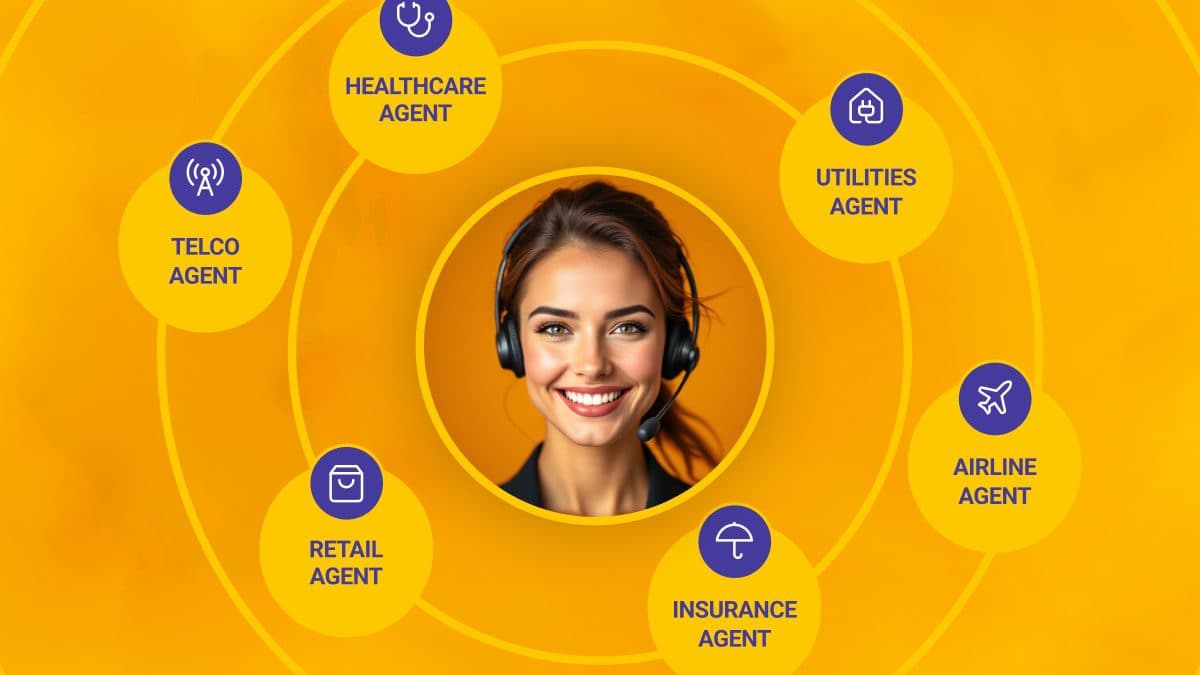
As enterprises move from single-purpose AI tools to complex ecosystems of copilots, autonomous agents, LLMs, MCPs, and automation workflows, coordination becomes the real challenge. That is where an ai agent orchestration platform becomes essential.
Instead of running disconnected bots and models across departments, businesses need a way to route tasks, manage context, govern decisions, and ensure agents work together toward a shared outcome. In 2026, success with AI is no longer about deploying more agents. It is about orchestrating them effectively.
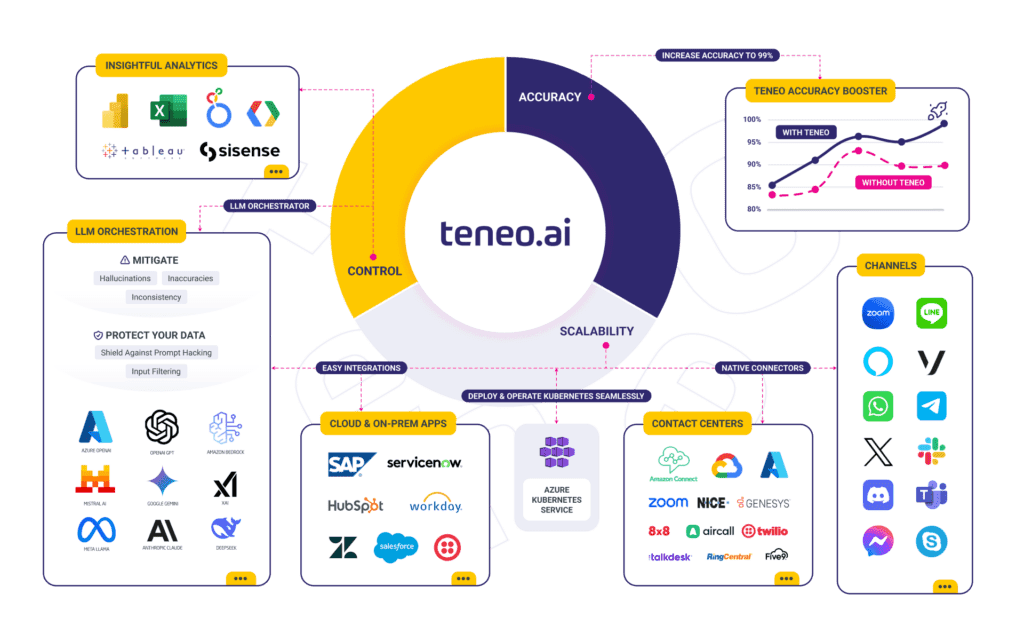
This guide explains what an ai agent orchestration platform is, why it matters, which capabilities to prioritize, and how enterprise platforms such as Teneo help organizations scale intelligent automation with more control. Teneo is an an enterprise AI agent platform focused on orchestrating AI agents and LLM-driven workflows, with low-code tooling, and enterprise security built into the stack.
What Is an AI Agent Orchestration Platform?
An ai agent orchestration platform is software that coordinates multiple AI agents, models, tools, and enterprise systems so they can work together in structured, reliable workflows.
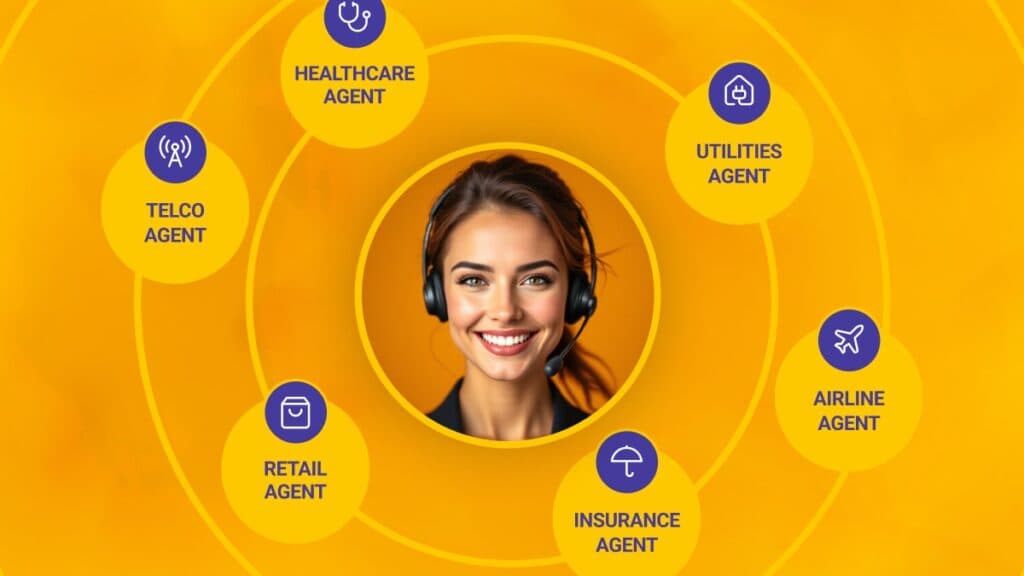
Think of it as the control layer for Agentic AI. Rather than letting each agent act in isolation, the orchestration layer decides which agent should handle which task, what data or tool it should access, when to escalate, and how context should be passed across the workflow. This is especially important in enterprise environments where workflows span customer service, operations, analytics, compliance, and backend systems.
For example, a customer service workflow might involve one agent classifying intent, another retrieving knowledge, another handling account actions through APIs, and a final step escalating edge cases to a human. Without orchestration, that process becomes fragmented. With orchestration, it becomes consistent, traceable, and scalable.
Why AI Agent Orchestration Matters
Most enterprises are no longer experimenting with just one model or assistant. They are working across channels, clouds, data sources, and business systems. This because the best LLMs out in the market usually change from week to week between Anthropic Claude, Google Gemini, and OpenAI GPT, and enterprises need to adapt. The result is often AI sprawl: too many tools, too little coordination.
An ai agent orchestration platform solves that by creating a unified framework for execution. It helps businesses route tasks intelligently, reduce duplication, enforce governance, and improve the overall quality of AI outcomes. This matters even more in regulated or customer-facing environments, where a broken handoff or unreliable answer can damage trust fast, here platforms like Teneo is the key differentiator for enterprises.
In practical terms, orchestration helps organizations move from isolated pilots to enterprise-wide AI operations.
Core Features to Look For
Not every platform offers the same depth. The strongest solutions combine flexibility with governance.
Multi-Agent Workflow Coordination
A strong ai agent orchestration platform should support multiple orchestration patterns, such as centralized, hierarchical, or adaptive coordination. This allows businesses to match the workflow design to the complexity of the use case rather than forcing every process into the same model.
Context Sharing and Memory
Agents need access to the right context at the right time. That includes conversation history, workflow status, business rules, customer data, and prior agent outputs. Strong context management reduces repetition, improves accuracy, and enables smoother handoffs.
Tool and System Integration
Orchestration only works when agents can take action. That means connecting to MCPs, APIs, CRMs, contact center platforms, internal databases, and knowledge systems.
Governance, Security, and Observability
Enterprise AI needs more than automation. It needs control. Role-based access, auditability, encryption, monitoring, and fallback paths are essential. Teneo platform includes enterprise security measures, access control, and orchestration features designed for reliable deployment at scale.

Low-Code and Developer Flexibility
Business teams want speed, while technical teams want customization. The best platforms support both. Low-code interfaces accelerate deployment, while APIs and extensibility prevent lock-in.
Key Benefits for Enterprises
The value of an ai agent orchestration platform comes from turning AI activity into business outcomes.
First, it improves efficiency. Agents can automate multi-step tasks without forcing employees to manually bridge systems. Second, it improves consistency. Orchestration makes it easier to standardize how tasks are routed, resolved, and escalated. Third, it increases scalability. As more agents and models are added, the platform keeps them coordinated instead of chaotic.
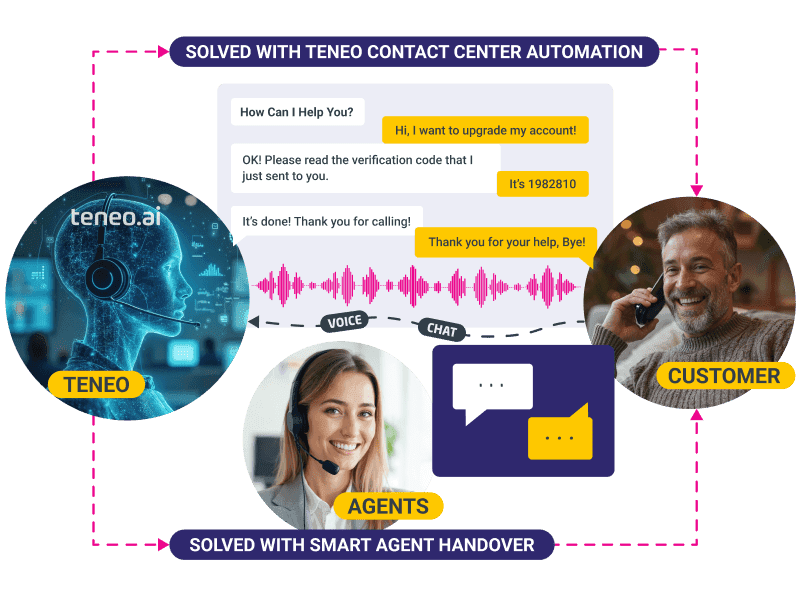
It also strengthens governance. Centralized visibility helps organizations monitor performance, apply policies, and reduce operational risk. And finally, it improves customer and employee experiences by making interactions faster, more contextual, and more reliable. These benefits align closely with how leading vendors describe orchestration value: scalability, efficiency, flexibility, and governance.
Common Use Cases
An ai agent orchestration platform becomes especially valuable when workflows are dynamic, cross-functional, or high volume.
In customer service, it can route conversations across billing, technical support, identity verification, and human escalation. In IT operations, it can combine monitoring agents, troubleshooting agents, and knowledge retrieval workflows. In sales and marketing, it can coordinate lead qualification, CRM updates, campaign insights, and follow-up generation.
It is also highly relevant in contact centers, where voice and chat interactions often require multiple systems to work together in real time.
How Teneo Fits Into the AI Orchestration Landscape
Teneo stands out as an enterprise-focused platform that combines AI agent building, LLM orchestration, integrations, and governance in one environment. It supports orchestration of AI agents and LLMs, offers low-code agent development, public APIs, and enterprise-grade security, and is used at scale across thousands of live agents across industries.
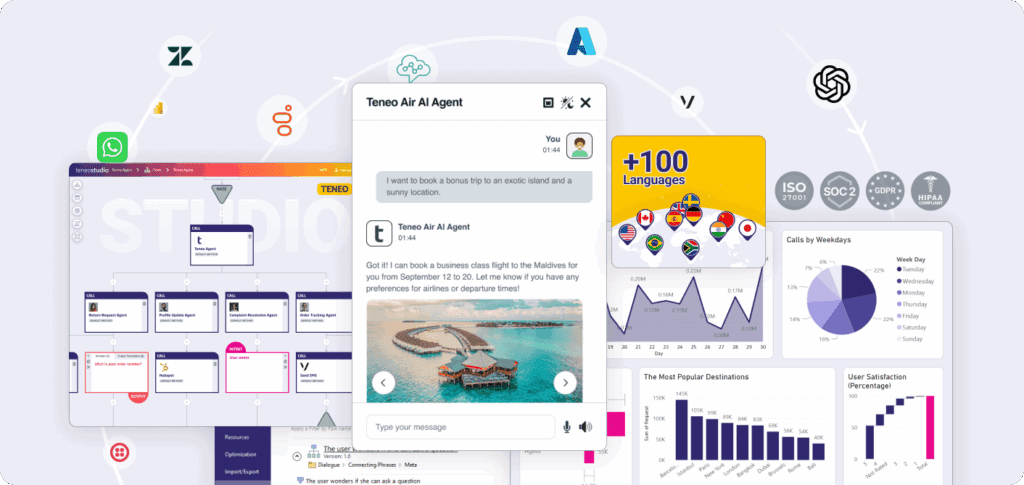
In other words, if your goal is not just to deploy agents but to manage how they collaborate, act, and scale, Teneo is worth serious consideration.
FAQs
What does an AI agent orchestration platform do?
It coordinates multiple AI agents, models, tools, and workflows so they work together efficiently, with the right context, routing, and governance.
How is AI agent orchestration different from a single AI agent?
A single agent handles one workflow or task, while orchestration manages how multiple specialized agents collaborate across a broader process.
Why do enterprises need AI orchestration?
Enterprises need it to reduce AI silos, improve consistency, scale automation, strengthen governance, and connect AI workflows to real business systems.
What features matter most in an orchestration platform?
The most important features are multi-agent coordination, integrations, context sharing, observability, fallback handling, security, and flexible low-code or pro-code development.
Is Teneo an AI agent orchestration platform?
Yes. Teneo publicly positions its platform around AI agent and LLM orchestration, low-code agent building, open APIs, enterprise integration, and secure deployment at scale.
Conclusion
An ai agent orchestration platform is quickly becoming a core layer in the enterprise AI stack. It brings order to growing ecosystems of agents, models, tools, and workflows, helping organizations move from fragmented experiments to reliable, scalable execution.
For companies evaluating platforms in this category, the goal should not just be automation. It should be coordinated automation with governance, adaptability, and measurable value. That is why platforms like Teneo are gaining attention: they combine orchestration, enterprise readiness, and practical deployment tools in a way that supports real business outcomes. If you want AI agents that do more than operate alone, orchestration is the missing piece.